
Okay, so check this out—I’ve been bouncing between exchanges for years, and every time I come back to OKX something clicks. Wow! There’s a mix of polish and grit that, for me, hits the sweet spot: pro-grade features with a UI that doesn’t make you want to throw your laptop. My instinct said “use it” the first time I tried their derivatives interface, but then I dug in and found useful little choices everywhere—shortcuts, clever confirmations, and a surprisingly sane mobile layout.
Here’s the thing. Seriously? Logging into an exchange should be simple. Yet it often isn’t. Initially I thought the biggest barrier was two-factor setup, but then realized the real pain points are account recovery, verification hiccups, and phishing traps that are designed to look exactly like your login page. On one hand, OKX gives you robust security tools—though actually, wait—there are UX rough edges that trip up even experienced traders.
Let me walk you through my practical, slightly opinionated guide to getting into your OKX account fast, keeping it safe, and avoiding common pitfalls. Something felt off about every “click here to login” email I ever got, so I started developing habits that saved me time and headaches over the years. Some of these are basic; some are the little hacks you pick up at 2 AM when crypto markets won’t quit.
First, the basics. You’ll need your email/phone and password, plus whatever 2FA you set up—so keep that authenticator handy. If you prefer hardware keys, OKX supports U2F keys and they work beautifully once configured. Wow, that feels secure. If you want the direct route to sign in, bookmark the official okx login page I use all the time: okx login. It’s saved me from some nasty spoofed links.
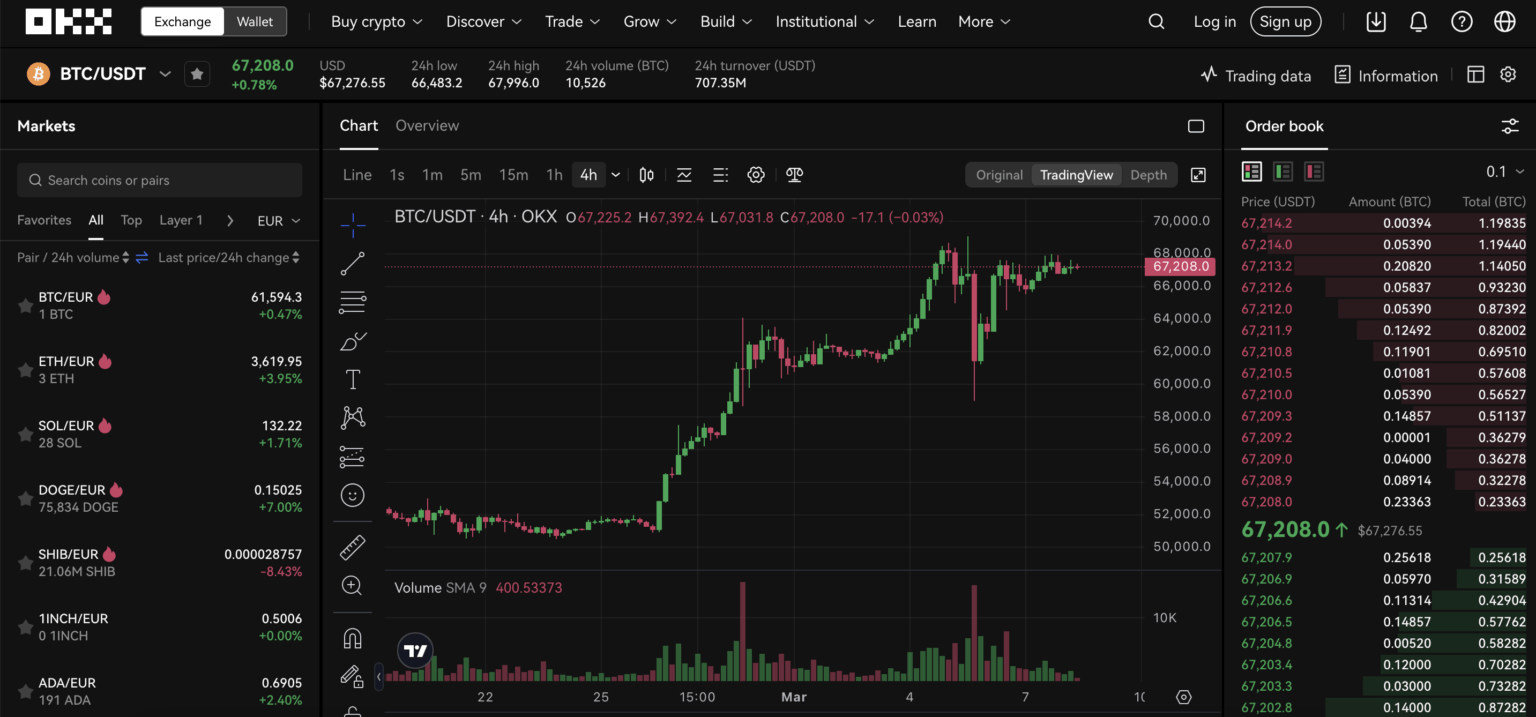
Before You Click: Prep Like a Pro
Quick checklist—short and useful. Really? Yes. 1) Confirm the URL is correct. 2) Verify your security device is charged. 3) Close other tabs that contain sensitive sessions. 4) Make sure your CAPTCHA isn’t being blocked by an extension. These are small steps but they cut down on dumb mistakes. My habit: I breathe, I verify, then I login. On bad days I forget step 3 and pay for it with a frozen session… ugh.
Two-factor authentication is non-negotiable. Use an authenticator app rather than SMS if you care about longevity and security. Hardware keys are best if you can swing it. Initially I set up SMS because it was fast, though later I moved to an authenticator app when I realized how easily SIM swaps can wreck a night. I’m biased, but this part bugs me because people keep relying on SMS.
Recovery options are the unsung hero. Add a backup email, write down your recovery phrases somewhere offline, and consider a password manager. Seriously, password managers make life exponentially less painful. My favorite trick: create a memorable passphrase, then store the exact password in the manager so you never have to type it again. Sounds lazy, but it’s smart. And yes, test your recovery once—don’t let it sit like an untested fire alarm.
When Things Go Wrong (they will)
On a rushed morning I once locked myself out due to a bad mobile update. Wow—panic. My heart raced, and my first instinct was to hammer support. That’s the wrong move. Calmly gather your account details, screenshot whatever error you see, and use the official support channels. OKX has a verified support portal and, more importantly, a documented identity verification flow that you should follow carefully. Rushing causes small mistakes that slow you down more.
Sometimes the verification process will ask for ID or selfie verification. Be methodical. Scan or photograph in good light, follow the prompts exactly, and if they ask for a timestamped note, include it. On one hand this feels invasive—though actually, wait—it’s a trade-off for account safety. I’m not 100% thrilled about all the data I’ve had to share with exchanges, but when markets move fast, proving ownership quickly matters.
Phishing is real. Emails that look legit often aren’t. My rule: if the email asks you to login from an embedded link, don’t. Copy the company name and navigate manually or use the bookmark you trust. Also, look for tiny anomalies—misspellings, odd punctuation, or a domain that’s one character off. If something smells off, it probably is. Hmm… people miss these cues under stress.
Advanced Settings I Actually Use
API keys. If you use bots or external tools, create dedicated API keys with narrow permissions. Don’t give withdrawal rights unless absolutely necessary. I once accidentally shared overly broad keys and had to cancel them mid-trade—lesson learned. Keep rotation schedules and label keys clearly, because later you’ll thank past-you for being organized.
Account encryption and device management: review authorized devices regularly. If you see a forgotten laptop listed, revoke it immediately. On OKX you can view session history and kill sessions; use that feature. It’s low effort but gives you control. My workflow includes a monthly sweep where I log in, check devices, review API keys, and confirm notification settings. It’s about 10 minutes and prevents bigger problems.
Withdrawal whitelist—set it. Seriously set it. This whitelist means withdrawals only go to pre-approved addresses. It’s an extra step, but if someone phishes your login they still can’t pull funds out to a random address. This part saved a colleague of mine once when they clicked a fake login during a margin call—lucky break, but don’t count on luck.
Common Questions Traders Ask
How do I change my OKX password safely?
Use a password manager to generate a strong, unique password. Log in, go to security settings, change the password, and force logout on all devices. Then update stored credentials on your devices. If you suspect compromise, enable a pending period before withdrawals are allowed—OKX sometimes provides options to limit withdrawals after major security changes.
What’s the best 2FA option?
Hardware keys (U2F) are top-tier. Authenticator apps (like Google Authenticator or Authy) are excellent and much better than SMS. Avoid SMS if possible. If you must use SMS, combine it with additional safeguards such as withdrawal whitelists and strong passwords.
I lost my phone—how do I recover my account?
Follow OKX’s account recovery flow: provide identity verification, backup email or recovery codes, and any account transaction history they request. Keep calm, follow instructions exactly, and don’t reuse password resets sent via suspicious channels. It’ll take time, but unless critical mistakes were made (like sharing seed phrases), recovery is doable.
Alright—closing thoughts. I’m biased toward tools that give control without being obtuse. OKX is not perfect, but it strikes a balance I appreciate: advanced options for power users, sensible security ergonomics for the rest of us. Something about the product feels honest. My final tip? Treat your login flow like a system you maintain, not a single event you check off. Update, review, and practice recovery—do that and you’ll sleep easier.
I’m not 100% sure every trader will like the same settings I use, but these are practical defaults from someone who’s been burned and learned. Try them, adapt them, and keep a little humility—markets change, attacks evolve, and the security arms race keeps us on our toes. Really, stay curious and a little paranoid. It works.